
Location
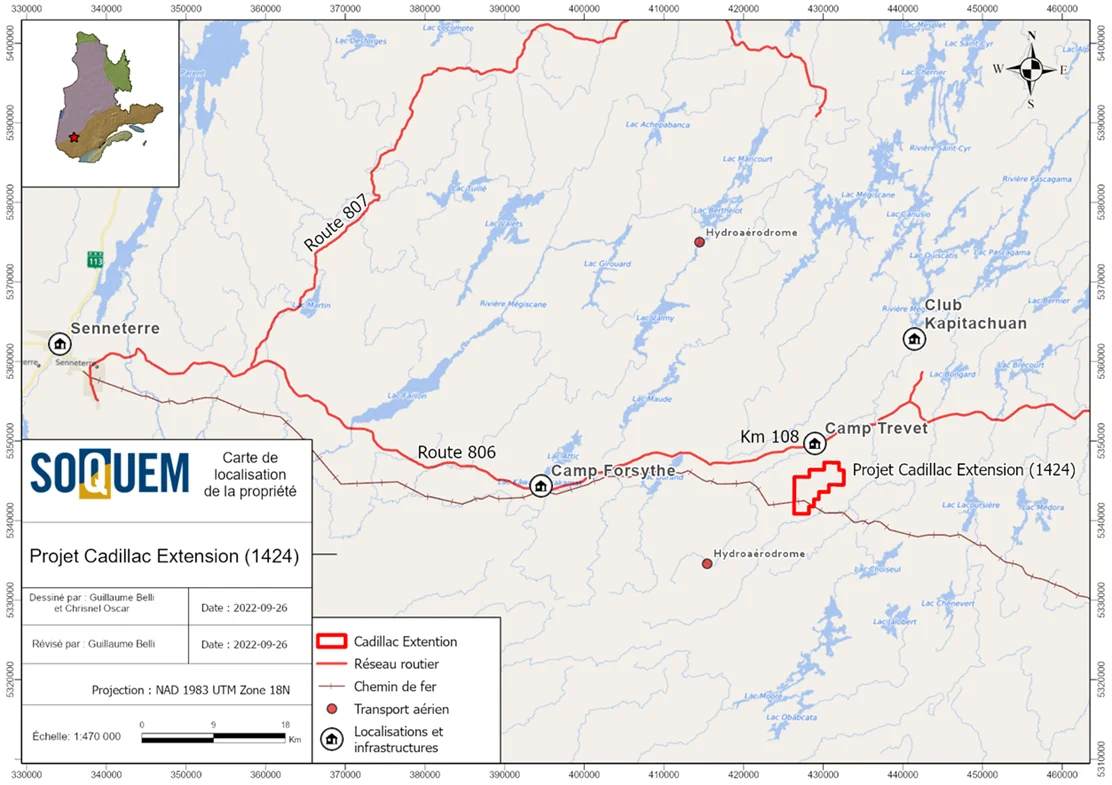
James Bay Region, Québec (35 km west of Highway 167, north of Chibougamau)
Ownership
100% owned without royalty and constraints
Size
41,000 Hectares
Primary Metals
Au, Ag, Cu, Zn
Stage
Exploration
Interactive Map
On June 10, 2025, Bullion completed the acquisition of the Langlade project (74 claims – 4,127 ha), formerly named Cadillac Extension, in exchange for the issuance of 6,000,000 common shares and the granting of a 1% NSR. Located approximately 100 km east of the municipality of Senneterre, this project is accessible year-round via a well-developed forest road network. This project, with potential for volcanogenic massive sulfide (“VMS”) mineralization has shown very promising historical drilling results.
This project, with potential for volcanogenic massive sulfide (VMS) mineralization, was discovered in 1991 by Cominco Ltd. and has shown very promising historical drilling results:
| Drill Hole | From (m) | To (m) | Length (m) | Au (ppb) | Ag (ppm) | Cu (%) | Zn (%) | CuEq¹ (%) |
| 4CW-92-1 | 36.0 | 85.6 | 49.6 | 207 | 40.8 | 0.62 | 0.73 | 1.42 |
| 4CW-92-8 | 83.18 | 136.9 | 53.76 | 84 | 16.3 | 0.45 | 0.36 | 0.79 |
| 4CW-92-13 | 218.1 | 228.3 | 10.25 | 334 | 21.7 | 0.51 | 0.94 | 1.31 |
| LAN-11-02 | 31.7 | 69.4 | 37.7 | 198 | 35.1 | 0.61 | 0.86 | 1.39 |
| Including | 31.7 | 46.6 | 10.3 | 264 | 35.1 | 0.99 | 1.99 | 2.15 |
| LAN-11-03 | 27.0 | 76.6 | 49.6 | 148 | 13.7 | 0.31 | 0.38 | 0.69 |
| Including | 35.0 | 51.9 | 16.9 | 383 | 32.9 | 0.55 | 0.74 | 1.45 |
| LAN-11-04 | 22.0 | 47.1 | 25.1 | 57 | 9.0 | 0.36 | 0.73 | 0.71 |
| Including | 28.1 | 34.3 | 6.2 | 108 | 21.1 | 0.82 | 3.21 | 2.03 |
| LAN-11-05 | 34.0 | 39.7 | 5.7 | 26 | 23.2 | 0.98 | 0.72 | 1.43 |
| LAN-11-06 | 53.0 | 88.0 | 35.0 | 77 | 19.1 | 0.51 | 0.66 | 0.96 |
| Including | 53.0 | 63.1 | 10.1 | 60 | 26.1 | 0.82 | 2.08 | 1.72 |
| LAN-11-07 | 73.0 | 97.4 | 24.4 | 165 | 21.1 | 0.41 | 0.71 | 0.97 |
| LAN-12-11 | 54.4 | 99.7 | 45.3 | 214 | 15.8 | 0.39 | 0.47 | 0.88 |
| Including | 88.4 | 99.0 | 10.6 | 382 | 22.7 | 1.06 | 0.69 | 1.84 |
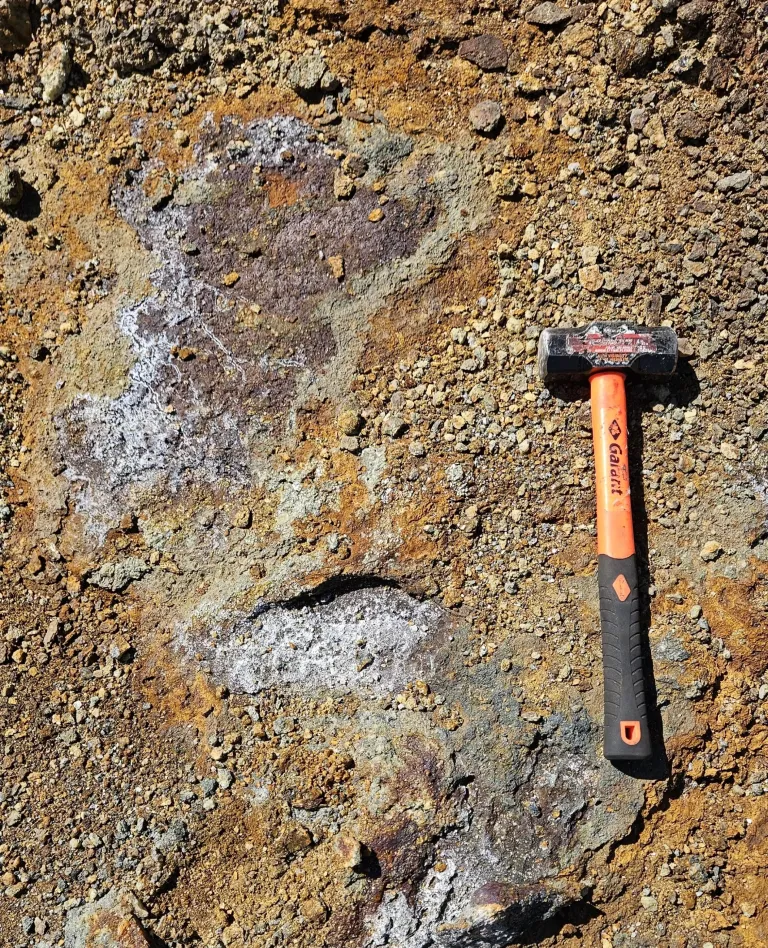
Semi-massive sulfides with outcropping were discovered in 1991 through an airborne electromagnetic survey, followed by ground-based electromagnetic, gravimetric, and geochemical surveys.
The Langlade showing is characterized by copper, zinc, silver, and gold mineralization located at the contact between felsic to intermediate metavolcanics and mafic metavolcanics (GM 65347). Secondary elements such as indium, lead, and nickel have also been identified. This primarily tabular zone is composed of semi-massive and disseminated sulfides extending over approximately 300 meters in length, with a width ranging from 50 to 100 meters, and exhibits a lenticular shape (MB 94-34, GM 65347).
Drilling has traced the mineralization eastward from the outcrops over a distance of more than 1,200 meters and down to a depth of 900 meters (GM 58489, GM 65347). The main horizon has an average thickness of 50 meters and dips gently (20°) to the southeast. Blasting work revealed a new significant copper- and zinc-rich mineralized zone located 200 meters north of the main area (GM 58489). Trench 1 exposed along nearly its entire length one or several sulfide-rich beds 1 to 2 meters thick, while a similar bed was observed in Trench 4, 12 meters to the southeast (GM 58490).
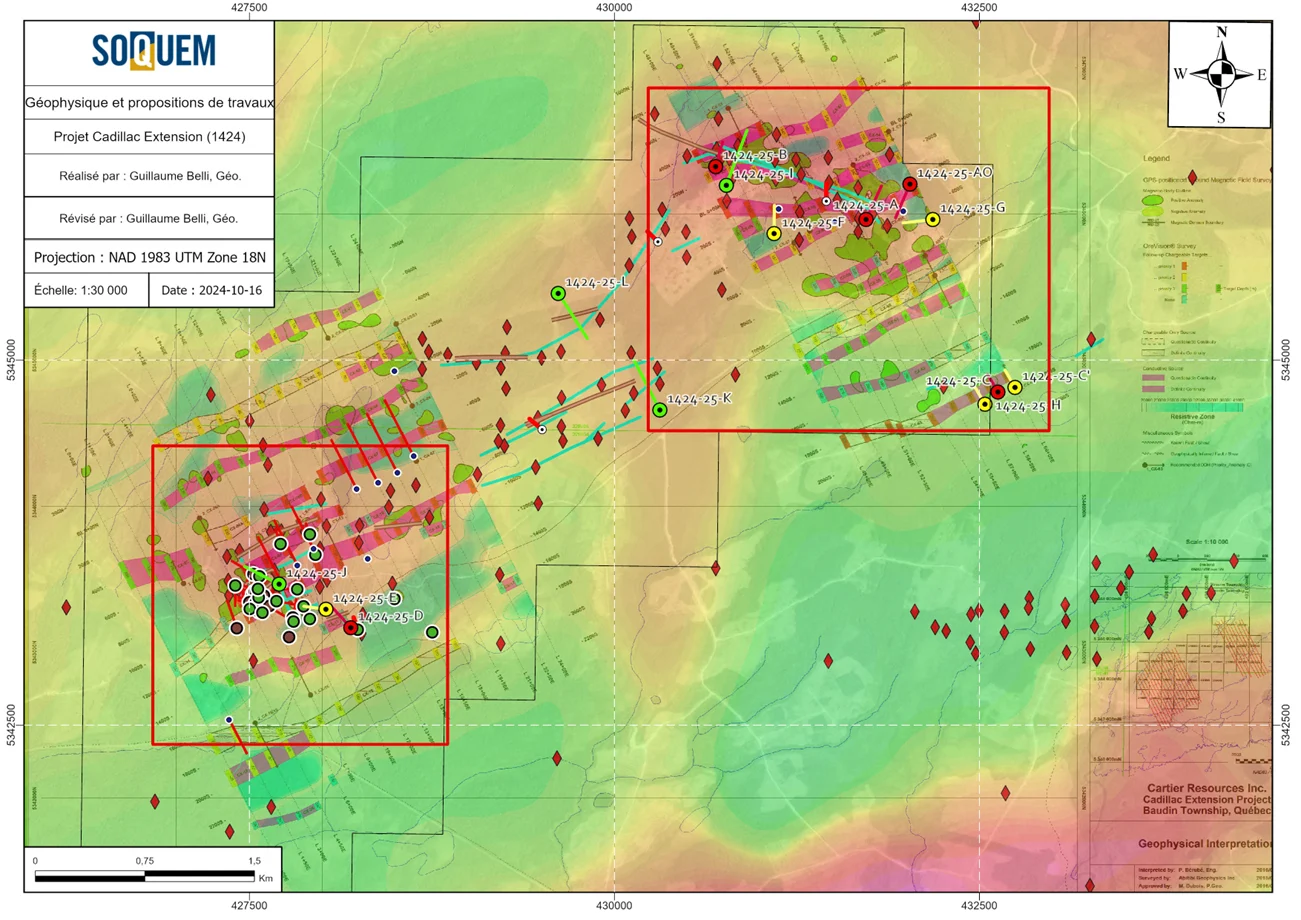
Several untested electromagnetic conductors (INPUT, HEM), as well as numerous unexplored induced polarization (IP) anomalies, have also been identified. The magnetic signature reveals the presence of faults and folds, a geological setting favorable for the formation of massive and semi-massive sulfide lenses.
The project also offers strong exploration potential in the northeastern portion of the property, where several significant geophysical anomalies (INPUT and IP) have been identified, warranting further drilling.
With the acquisition of Langlade, Bullion Gold strengthens its position in the development of projects aligned with current geoeconomics priorities. This project, with strong copper and zinc potential, fits squarely into the global push to secure supplies of critical metals. The Company intends to leverage this strategic advancement to increase the value of its assets and contribute to a cleaner, more resilient energy future.
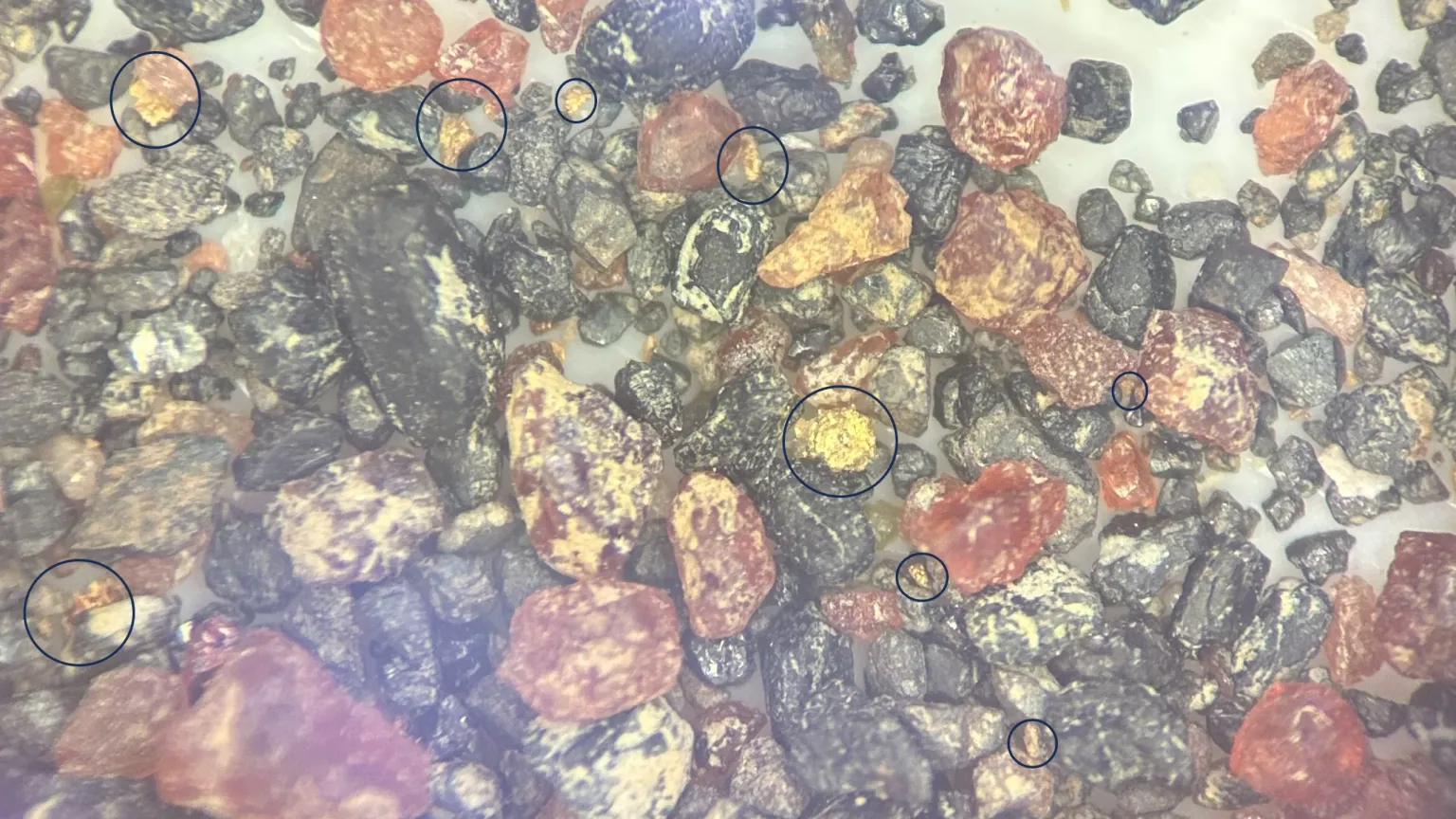
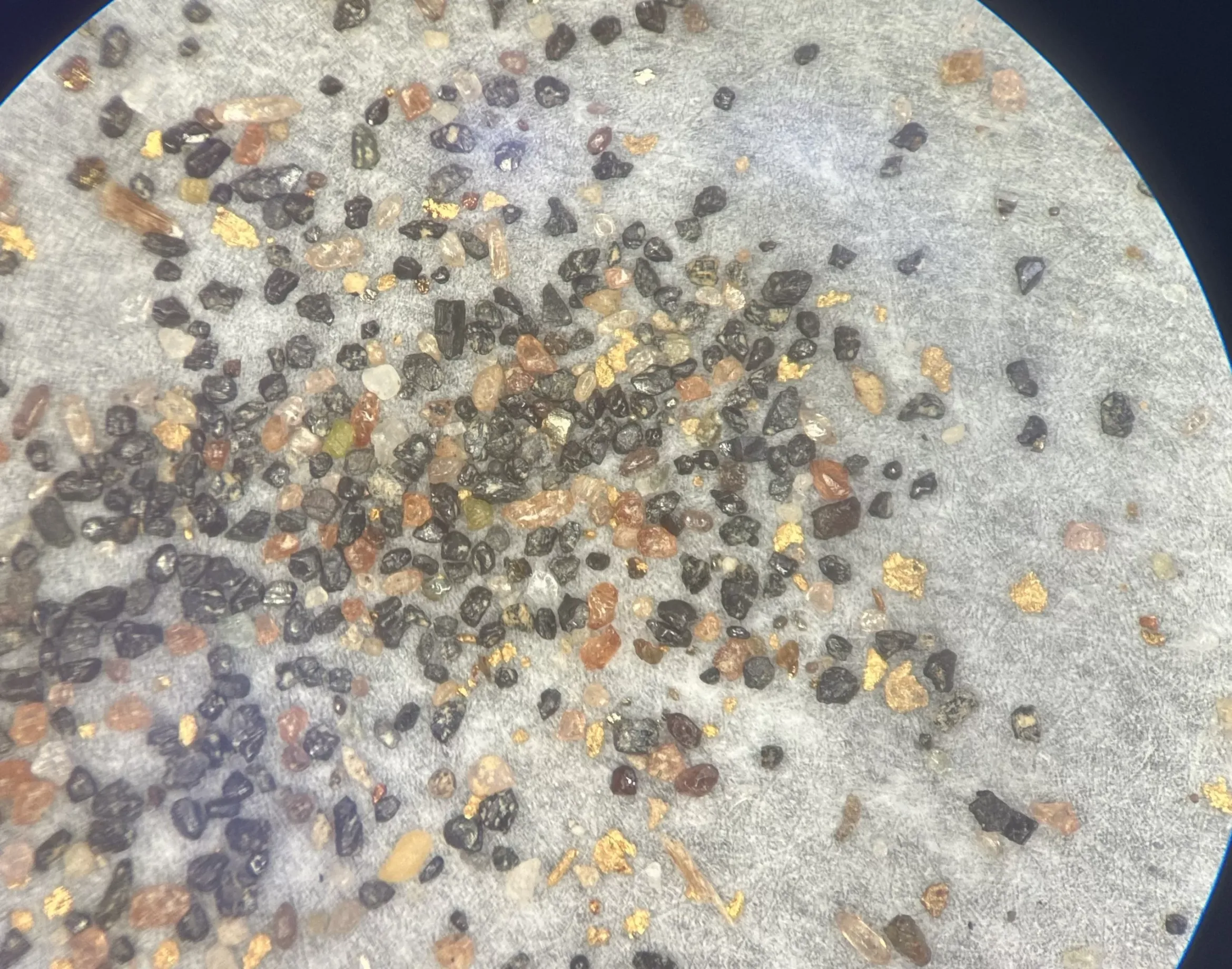
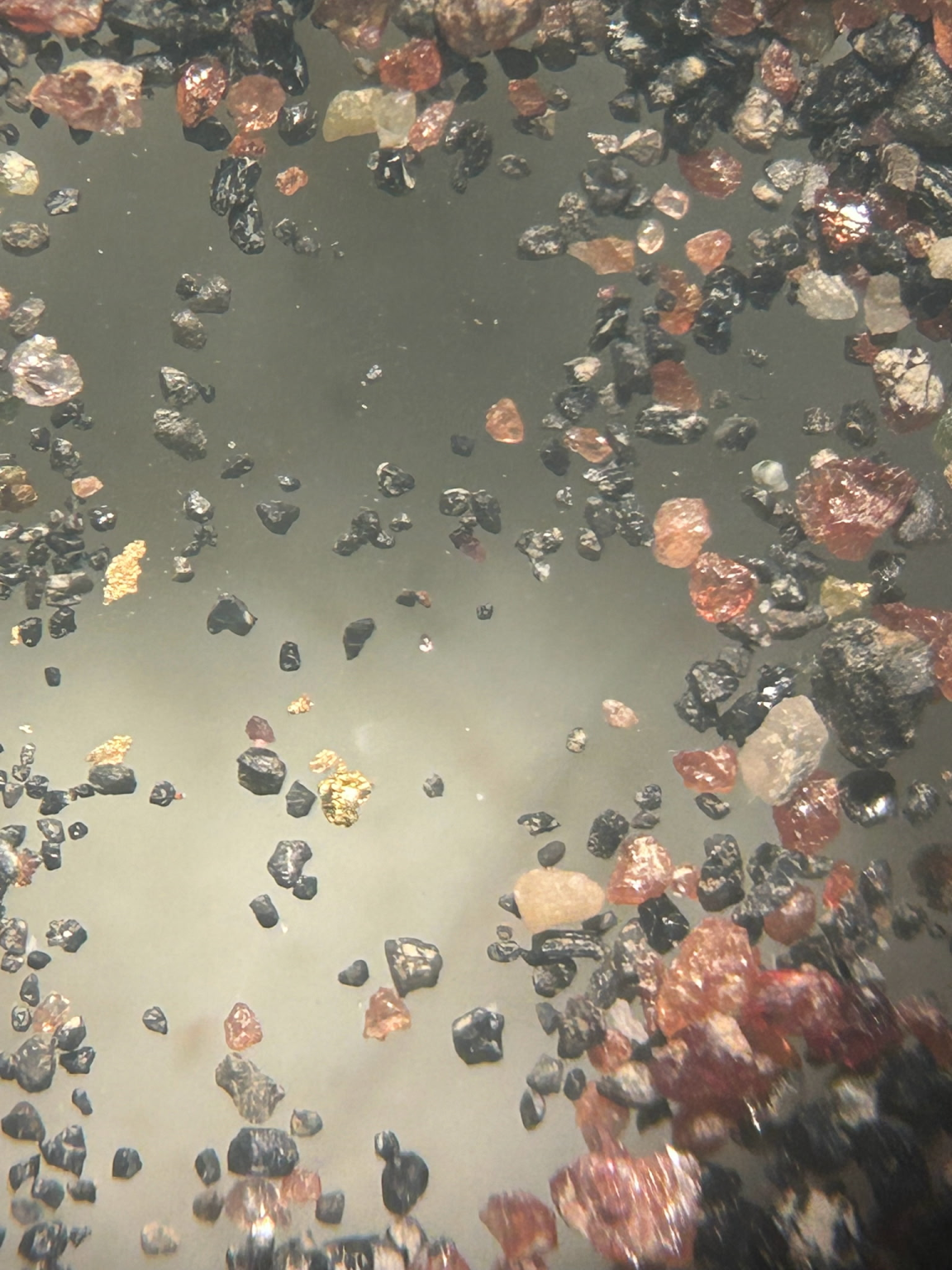
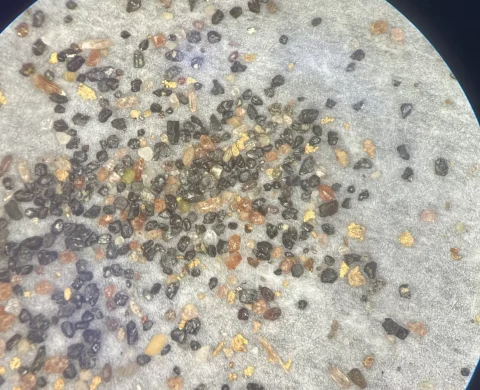
The Company recently collected a five (5) kilogram basal till test sample to evaluate the feasibility of a larger till sampling program north of the Langlade Prospect, following glacial transport modeling.
In the short to medium term, the Company’s objectives are to test the lateral and depth extensions of the Langlade showing, while also investigating the electromagnetic (INPUT, HEM) and IP anomalies detected in its immediate vicinity. The goal is to identify new VMS-type lenses similar to the Langlade showing.
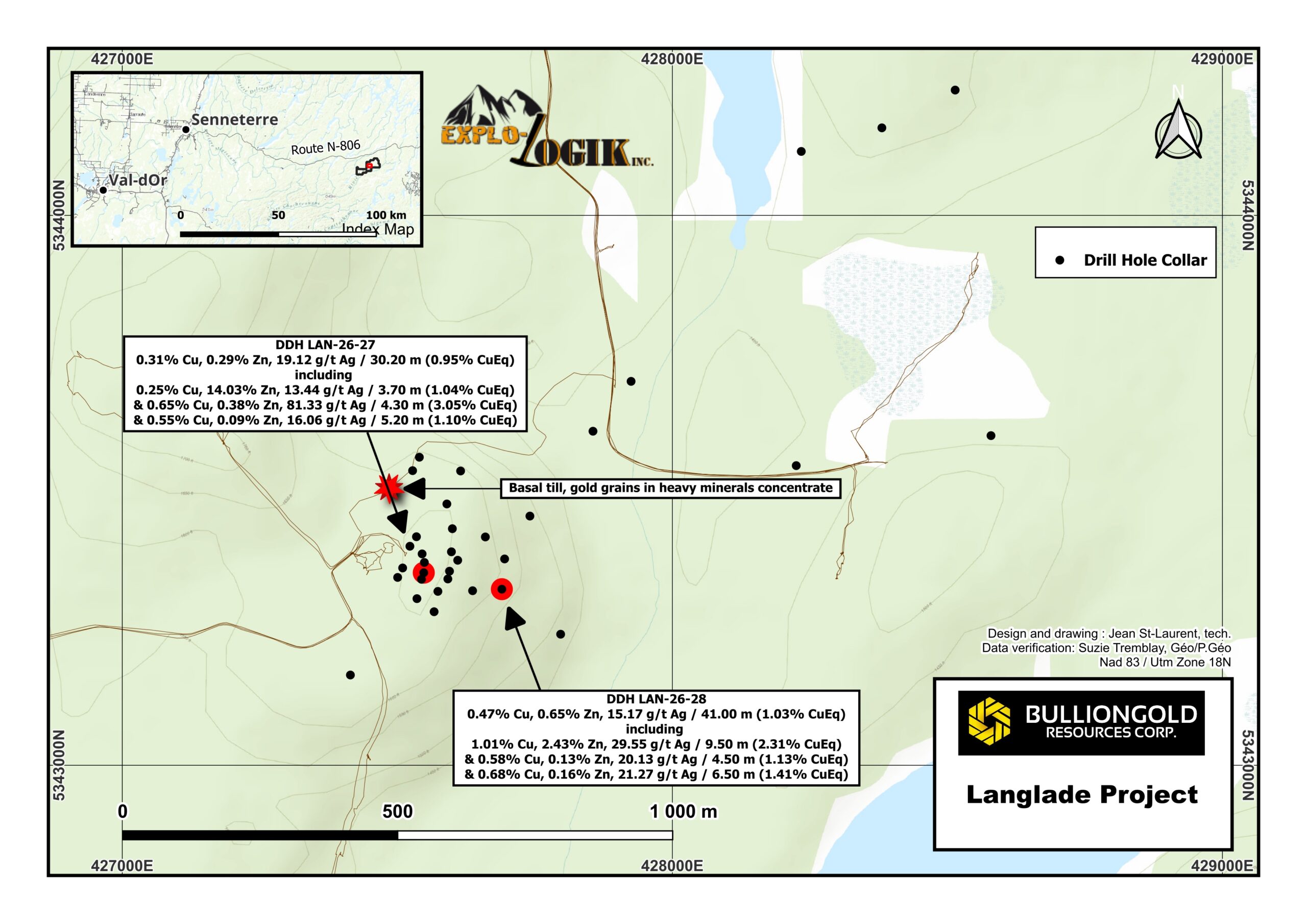
On May 5, 2026, Bullion announced the the results of DDH LAN-26-27 and LAN-26-28. The results confirm the presence of significant copper, zinc, and silver mineralization.
The Company recently collected a five (5) kilogram basal till test sample to evaluate the feasibility of a larger till sampling program north of the Langlade Prospect, following glacial transport modeling.

The Rivon Showing is located in the northeastern part of a broad corridor approximately 3.2 km thick comprising a package of massive and laminated volcanic rocks. The amphibolites represent metamorphic equivalents of basic volcanics. This greenstone assemblage is surrounded by a complex of gneiss and granite.
A few kilometres north of this belt, three narrow discontinuous bands of greenstone are interpreted as the remnants of a single, broader belt. At Holton Lake and a few kilometres south of it are rocks of the Mistassini Group.
East of Holton Lake, a greenstone belt is up to four miles wide and extends westward for a total distance of approximately 80 km.
The presence of copper, zinc, gold, silver and molybdenum is regularly noted in the various exploration works carried out in previous years in these different geological environments.
Seven mineralized outcrops were discovered by Merrill Island Mining in 1963 on the Rivon showing. Three of these were visited by Gilles Duquette, Chibougamau Resident Geologist in 1964 (GM14279). The following description is derived from his report.
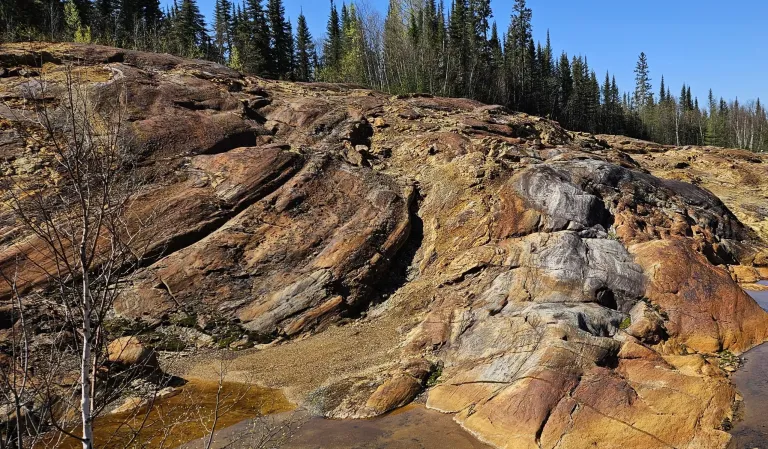
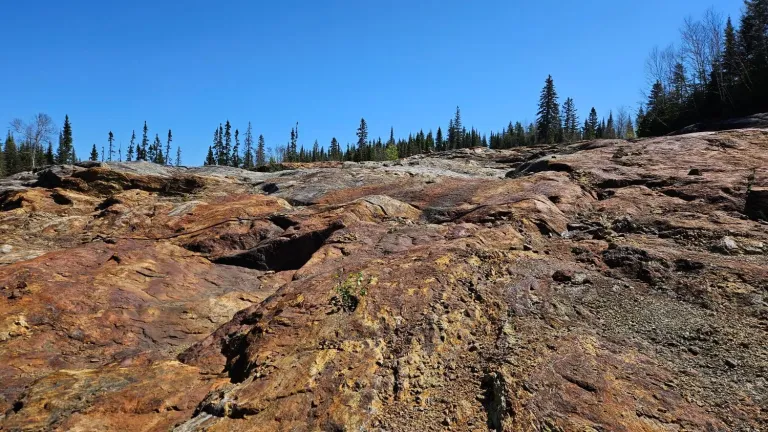
“The No. 3 copper showing was stripped and dug in 8 places and copper mineralization was exposed in an amphibolite over a length of over 210 metres. Although these trenches do not line up perfectly, they are confined to a 35-metre-wide band. The mineralization consists largely of quartz and chalcopyrite and pyrite with local concentrations of magnetite. Mineralization on the No. 4 showing consists mainly of lenses of quartz with chalcopyrite, gold, silver and molybdenum. The blasting and stripping done at the time exposed an area approximately 40 metres long and 8 metres wide (Graph 4),” underlines the resident geologist at the time.
Two series of short holes (Series A and Series B) undertaken by Merrill Island Mining in 1963 on the Rivon showing demonstrated the significant presence of copper, gold and silver in the majority of the holes. The holes of Series A drilled in a low intensity magnetic anomaly and located approximately 500 meters to the west of Series B cannot in any case have reached the polymetallic horizon of Group B, which is associated with a high intensity magnetic anomaly. The anomalous presence of copper, gold and silver is noted in both zones over thicknesses varying from 5 to 12 meters. This suggests that there could be several parallel mineralized zones in this sector of the Rivon showing. The two series of holes were drilled from north to south over a distance of approximately 450 meters for Horizon A and 1.3 km for Horizon B. Both horizons remain open in all directions.
Subscribe for the latest updates from Bullion Gold Discoveries Corp